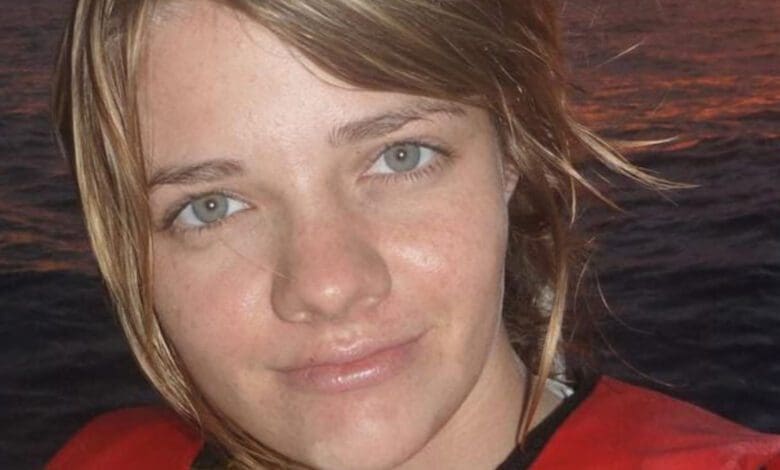
Jessica Watson sailed out of Sydney on 18 October 2009, aged 16, and returned on 15 May 2010 after 210 days alone at sea. Aboard Ella’s Pink Lady, she crossed the Pacific, Atlantic and Indian oceans on a non-stop voyage that made her a prominent figure in Australian sailing.
Her achievement is best understood through the preparation, the route and the boat, while keeping public descriptions of the voyage separate from the requirements for a formally recognised sailing record.
Jessica Watson’s voyage at a glance
Departure: Sydney, 18 October 2009.
Return: Sydney, 15 May 2010.
Time at sea: 210 days.
Age: 16 at both departure and return.
Boat: Ella’s Pink Lady, a Sparkman & Stephens-designed yacht of approximately 10.3 metres.
Voyage: solo, non-stop and unassisted, with a route crossing the equator and passing the southern capes.
Preparation before the departure
Watson grew up with time aboard boats and developed her ambition after hearing about earlier solo voyages. The Australian Museum’s account documents offshore experience and training in subjects including safety, machinery, radio operation and first aid before the attempt.
The build-up also included a serious setback. Ella’s Pink Lady collided with a bulk carrier during the passage towards Sydney, damaging her mast. The yacht was repaired before Watson began the voyage in October. That incident forms part of the preparation history, rather than an event during the subsequent 210-day passage.
Ella’s Pink Lady: the boat behind the story
The Queensland Maritime Museum identifies Ella’s Pink Lady as a Sparkman & Stephens yacht and describes the self-steering windvane that Watson called Parker. Self-steering was an important part of operating a small yacht over a long solo passage.
The boat’s modest size gives the voyage a different context from professional racing campaigns on much larger yachts. Maintaining the vessel, managing stores and keeping routines going belonged to the journey alongside navigation and heavy weather.
The route and the return to Sydney
Watson headed east across the Pacific, crossed the equator and rounded Cape Horn before continuing across the Atlantic and Indian oceans towards Australia. The Sport Australia Hall of Fame chronology records her equator crossing on 19 November 2009 and passage of Cape Horn on 13 January 2010.
The route then brought her past southern Africa and back towards Australia’s southern coast. Returning to Sydney on 15 May completed the 210-day voyage, shortly before her seventeenth birthday. Large crowds welcomed her home.
Was Jessica Watson’s voyage an official world record?
Watson’s achievement is widely celebrated as a solo, non-stop and unassisted voyage around the world. The wording of a ratified record is a separate matter: route requirements cannot be established simply by adding up all the miles logged while sailing.
The Queensland Maritime Museum notes that her route fell short of the 21,600-nautical-mile benchmark used for world-record circumnavigations. The Women’s Museum of Australia also describes the age claim as unofficial. Her journey should therefore not be presented as an unqualified, formally ratified “youngest” world record.
That distinction also matters when comparing sailors. A voyage with stops, a non-stop passage and a professional race involve different conditions. Watson’s story can be appreciated for what she accomplished without treating every solo voyage as the same category.
Recognition, True Spirit and the film
Watson was named Young Australian of the Year in 2011 and received the Medal of the Order of Australia in 2012. Australian Sailing’s Hall of Fame profile places her voyage and its influence on younger sailors in the wider context of her career.
She told the story in her memoir True Spirit. The 2023 film of the same name was directed by Sarah Spillane, with Teagan Croft playing Watson. Netflix’s production information identifies it as a dramatisation based on her experience, rather than documentary footage of the voyage.
For other approaches to life at sea on screen, explore our sailing movies and documentaries. To place Watson alongside earlier voyages, see 15 famous sailors and their achievements and the account of Francis Chichester and Gipsy Moth IV.