Buying a used cruising sailboat under 40 feet starts with two separate decisions: which type of boat suits your sailing, and which individual example is worth owning. A model with the right layout can still be a poor purchase if its rig, engine and structure need more work than the budget allows.
The five boats below offer different approaches to cruising. Some place more emphasis on passage-making arrangements; others favour accommodation or a balance between cruising and club racing. Their usefulness depends on your route, crew and willingness to maintain an older yacht.
Compare them as a shortlist for inspection, not as interchangeable boats that can all be prepared for the same voyage at the same cost.
Pacific Seacraft 34
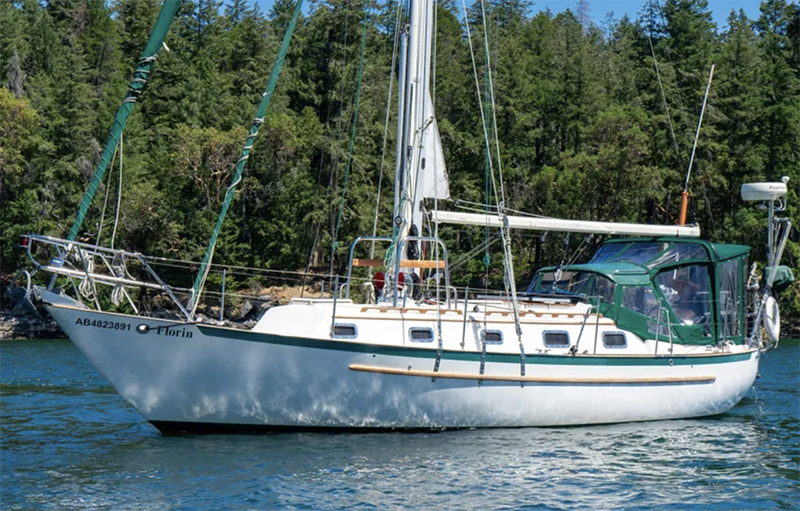
The Pacific Seacraft 34 is worth examining if a relatively compact cruising interior suits your plans. Its relationship to the larger Crealock designs gives it a different starting point from boats designed primarily to maximise the number of cabins.
For a couple, inspect the arrangement below as a working space. Try the berths, identify where wet clothing will go and check access to the engine and the equipment you will service most often. The ability to reach a component matters more than the amount of equipment fitted around it.
When comparing examples, separate the original specification from subsequent alterations. Ask for invoices for rigging and machinery work, and establish which repairs were documented professionally. Do not assume that an offshore reputation removes the need to assess the individual boat's condition.
Sabre 38 Mk II
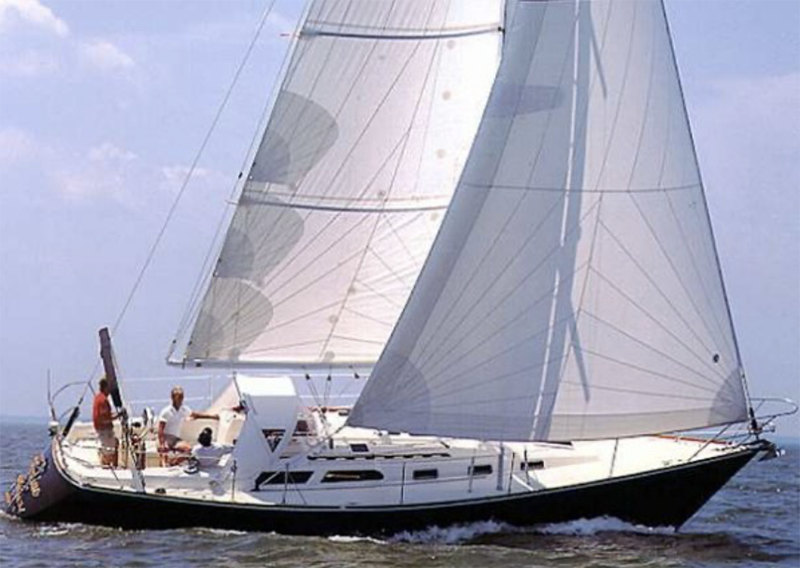
The Sabre 38 Mk II offers a route into a cruising boat that also retains an interest in sailing performance. It is a useful comparison for owners who want to enjoy local sailing and occasional racing as well as longer holidays aboard.
Confirm that the boat is the Mk II and establish its keel configuration from the documentation. A model name alone does not tell you the draft of the example being offered.
During the survey and sea trial, assess the condition of the structure and deck, steering, rig and engine installation. For your own use, check whether the cockpit and line arrangement work for the size of crew you expect to sail with. A deck plan that works well with several people may need different routines when sailed by two.
Island Packet 35
The Island Packet 35 offers a different set of priorities, with the builder's long-keel cruising approach and accommodation intended for time aboard. It may appeal to owners who place storage and a traditional cruising layout ahead of a more performance-led deck plan.
Ask how the boat has been maintained and what work has been done to the rig attachments, tanks and systems. Island Packet's factory-linked ancestry resources are useful for identifying model information and maintenance topics, but advice must be matched to the year and construction of the actual boat.
A sea trial should include low-speed handling. Before buying, understand how the boat responds when reversing, turning in a confined area and approaching a berth in a crosswind.
Tartan 37
The Sparkman & Stephens-designed Tartan 37 offers another way to combine cruising with an interest in sailing performance. The keel-and-centreboard configuration found on many examples is relevant to owners who use shallow cruising grounds but also want the option of lowering the board underway.
Establish the configuration of the individual yacht. The centreboard, operating mechanism and associated fittings need to be assessed as working equipment, not merely recorded as a feature in a sales description.
The class association provides a useful route to original model information and owners' experience. Use that material to prepare questions for the surveyor, while judging the boat in front of you on its repair history and present condition.
Catalina 36 Mk II
The Catalina 36 Mk II is a useful boat to compare when accommodation and straightforward family cruising are central to the brief. The builder's archived brochures help distinguish the Mk II from earlier Catalina 36 versions and identify the layout being offered.
Before viewing, decide how many separate berths you need and how often the boat will be used by the full crew. Then assess the galley, cockpit, ventilation and access to the machinery against those plans.
Look beyond recent interior work or new electronics. The rig, sails, steering, engine and structure still determine much of the purchase risk and preparation cost. A comfortable layout is valuable, but it should not absorb the budget needed to keep the boat serviceable.
Compare the boats by intended use
| Model | A useful reason to inspect one | A question to resolve during inspection |
|---|---|---|
| Pacific Seacraft 34 | Compact cruising arrangement | Does the working space suit the crew for extended time aboard? |
| Sabre 38 Mk II | Cruising with an interest in sailing performance | Which keel and equipment configuration is fitted? |
| Island Packet 35 | Traditional cruising layout and storage | Does handling under power suit your berth and experience? |
| Tartan 37 | Keel-and-centreboard cruising options | What is the condition of the board and its operating system? |
| Catalina 36 Mk II | Family accommodation | Does the layout work without compromising access and stowage? |
Build a budget around the individual boat
An asking price is not the cost of being ready to sail. Start with the agreed purchase price, then account for survey and haul-out, any applicable tax or registration costs, insurance, delivery and work required before departure.
Separate that work into three groups. The first covers defects that need resolving before the boat is used. The second covers equipment or maintenance required for the intended trip. The third covers improvements you would like but can defer.
Obtain written estimates for substantial work and identify what those estimates exclude. A boat with a recent engine and new sails may justify a different comparison from a cheaper example needing both. Equally, fitted equipment adds little value if it is obsolete, poorly installed or no longer supported.
Prices also depend on location, tax status and the circumstances of the sale. A group of advertised boats provides asking-price evidence, not a record of completed transactions. Compare boats of similar age and specification before describing a figure as representative of the market.
What to check before making a commitment
Ask for the ownership documents, maintenance records and a clear list of equipment included in the sale. Confirm which model and version you are buying and resolve any difference between the advertisement and the registration or builder's documentation.
Arrange an independent survey suited to the boat and planned use. Agree its scope, including whether the rig and machinery require separate specialist inspections. A sea trial should test operation under sail and power, rather than serve only as a demonstration of the electronics.
Finally, compare the preparation work with your available time. An extensive refit can be a sensible project for an owner with the skills and facilities to manage it. It is a different purchase from a boat intended to leave on a cruise soon after the sale.
For the offshore-design comparison, see our guide to bluewater sailboats under 40 feet. If you are considering larger used boats, our selection of sailboats from the 1990s offers a separate starting point.