
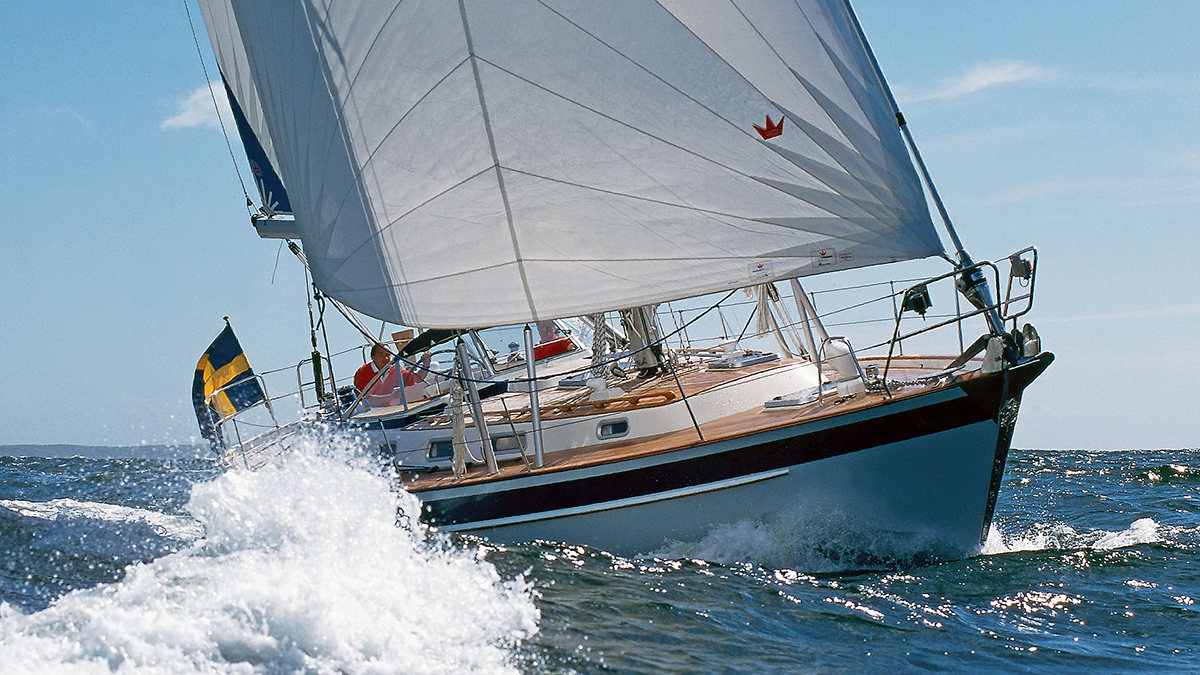
Sailboats from the 1990s offer a broad used-boat comparison: a centre-cockpit cruising yacht, a performance cruiser and a racing-oriented design may all come from the same decade while answering very different needs. This selection looks at the Grand Soleil 46.3, Hallberg-Rassy 46, X-Yachts X-442, Beneteau First 40.7 and the 1990s generation of the Swan 48.
These are designs associated with the decade, not a claim that every example was built between 1990 and 1999. Several remained in production later. Before comparing specifications or prices, establish the model, generation, build year and configuration of the actual yacht.
1. Grand Soleil 46.3: a performance-cruising comparison

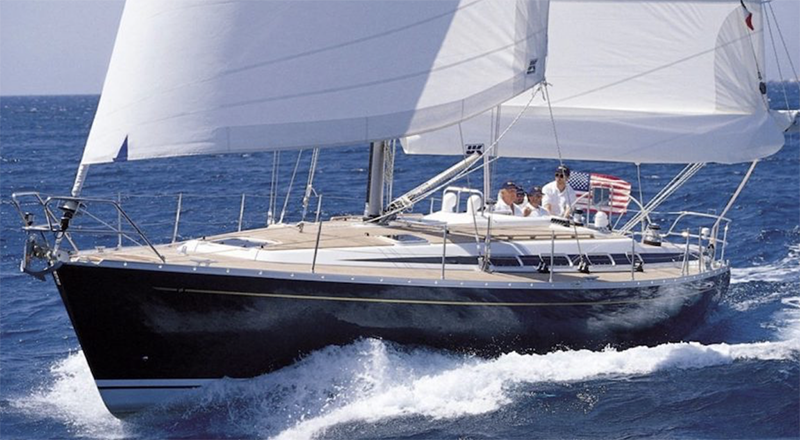
The J&J Design Grand Soleil 46.3 belongs on a shortlist for owners comparing cruising accommodation with a more sailing-oriented brief. It should be identified by its full model name, rather than confused with a different Grand Soleil 46 or a later 46 LC.
During a viewing, test the cockpit and sail-handling arrangement with your intended crew. Check whether the boat’s sails, reefing system and deck hardware suit regular cruising or reflect a previous owner’s racing programme.
Condition matters more than a general description of the model. Review the rigging history, deck condition, steering, machinery and any structural repairs with an independent surveyor. This broker’s model presentation identifies the 46.3 and its designer; the specification of any boat offered still needs individual verification.
2. Hallberg-Rassy 46: centre-cockpit cruising
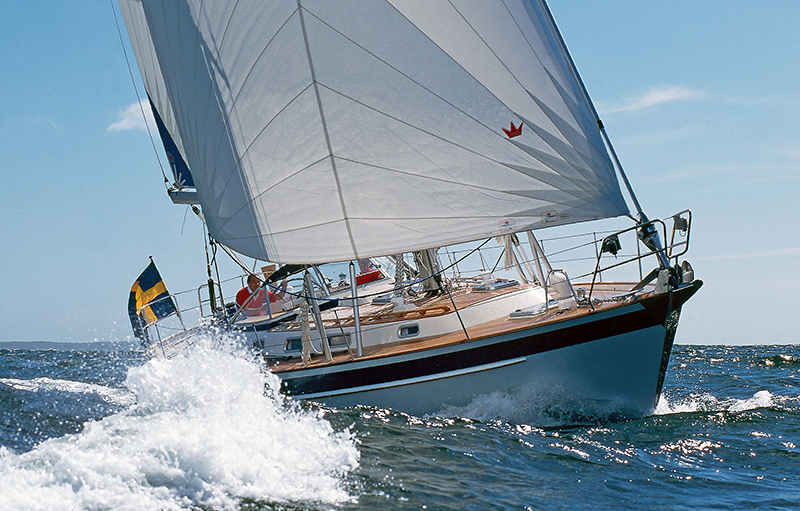
The Germán Frers-designed Hallberg-Rassy 46 was introduced in 1995. The builder documents a substantially revised hull and deck compared with the earlier 45, as well as changes to the cockpit, steering and accommodation.
For a cruising buyer, the centre cockpit and interior circulation deserve a practical inspection. Walk between the galley, saloon and sleeping cabins, then check access for routine maintenance. A protected cockpit arrangement is one consideration; the equipment and its condition remain separate questions.
The builder’s archive for the Hallberg-Rassy 46 includes documentation for different draft versions. Confirm which keel and equipment are fitted to the boat being viewed. If teak is present, establish its remaining condition and maintenance requirements rather than treating the finish as a purely cosmetic feature.
3. X-Yachts X-442: performance cruising
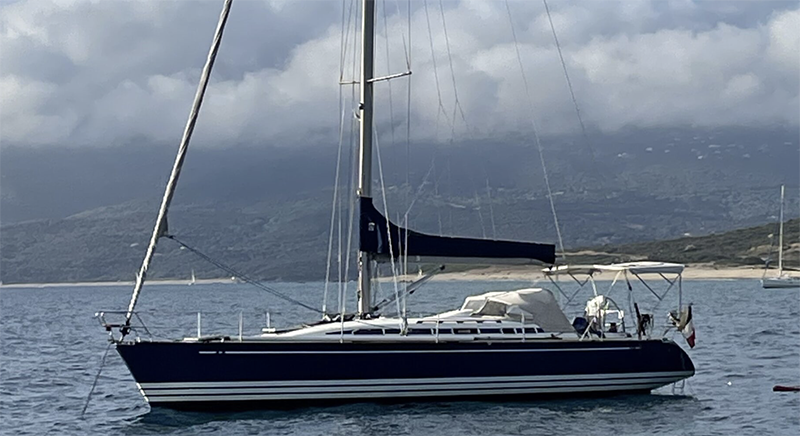
X-Yachts records the X-442 as a performance cruiser produced from 1993 to 2003, with a hull length of 13.51 metres. It provides a useful alternative for sailors who want to compare sailing performance and cruising use within the same boat.
A previous racing history is something to investigate, rather than an automatic reason to accept or reject an example. Ask about groundings, repairs, keel and rig work, and establish what documentation exists. Inspect the sail inventory for remaining service life, not just the number of sails listed.
Try the interior and cockpit against your own programme. A yacht equipped for a full crew may need different arrangements for a couple. Start with the builder’s previous-model archive, then compare the actual boat’s configuration.
4. Beneteau First 40.7: a racing and cruising brief
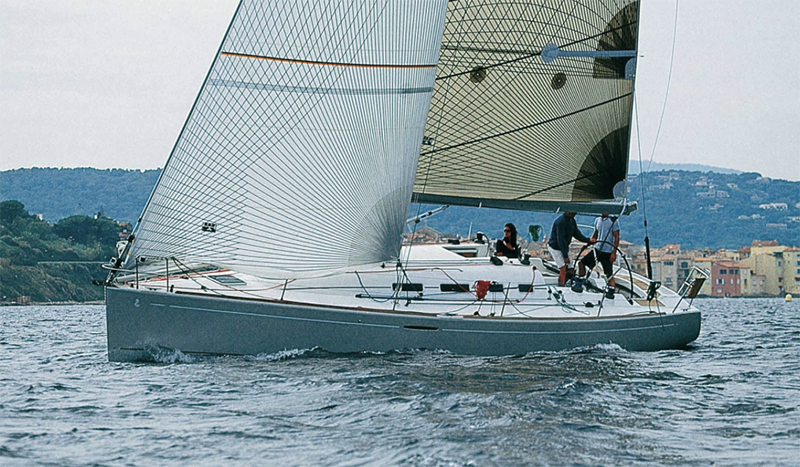
Beneteau’s heritage page identifies Farr Yacht Design as the naval architect of the First 40.7. The builder highlights the hull, appendages, cockpit ergonomics and sail plan as part of the model’s racing-and-cruising proposition.
For a used purchase, establish the boat’s use and maintenance history before judging a long equipment list. Ask for records of structural inspections, any grounding repairs and work involving the keel and rig. Agree the survey scope with a qualified surveyor, including access to the relevant internal structure.
Check the exact rig, keel and sail-handling configuration, and compare it with the number and experience of people who will normally sail aboard. Beneteau’s original-model information is a reference point, rather than proof that a decades-old example remains in original condition.
5. Swan 48: identify the 1990s generation
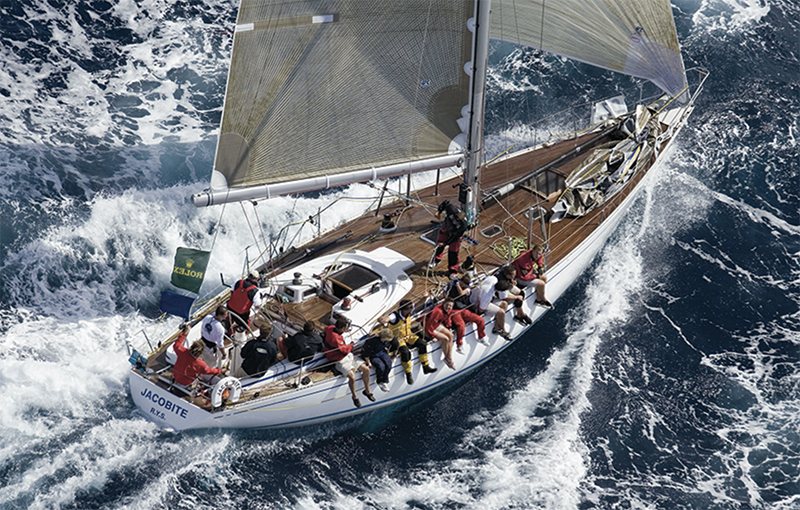
The Swan 48 name has been used for different designs. Here the comparison concerns the Germán Frers generation introduced in 1995, rather than the earlier Sparkman & Stephens boat or the substantially later Swan 48 design.
A listing should make that distinction clear. Berthon’s presentation of this generation identifies its designer and production period. Match the hull identification, drawings and photographs to the model before comparing dimensions or accommodation.
Assess the scale of the boat as well as the attraction of the name. Sail replacement, rigging work, machinery access and deck maintenance all belong in the ownership plan. Test how the yacht will be handled by your regular crew and ask for records supporting any claimed refit.
How to compare the five boats
Begin with a sailing brief: cruising area, draft limits, crew size, time aboard and whether racing matters. The Hallberg-Rassy’s centre cockpit gives a different starting point from the performance-cruising layouts; the First 40.7 adds a more racing-oriented comparison. None of those labels replaces inspection of the individual boat.
During a sea trial, assess visibility, reefing arrangements, manoeuvring under power and movement around the deck. Below, try the berths, galley and access to machinery. A layout that feels spacious at the dock may work differently with provisions and equipment aboard.
Price the preparation, not just the purchase
An advertised price is an asking price, not evidence of a completed sale. Location, tax status, specification and maintenance history can produce substantial differences between boats carrying the same model name.
Build a budget in separate parts: purchase, survey and haul-out, delivery, immediate repairs, equipment needed for your intended use and the ongoing cost of keeping the boat. Obtain quotations for the work identified on the particular yacht, with an allowance for uncertainty.
Compare dated listings of the same generation and similar condition. Identify which boats have recent sails, rigging or machinery and which still need those items. A lower asking price may leave a larger preparation bill; a claimed refit is valuable only when its scope and workmanship are documented.
For a smaller-boat starting point, see our used cruising sailboat buying guide under 40 feet. For an international design comparison across sizes, explore 18 bluewater sailboats and their approaches to ocean cruising.