

Two versions of the same cruising boat can have different published displacement figures. One may be the yard’s standard boat, the other a brokerage listing for a boat already fitted with a generator, a bigger battery bank and davits. Put the two figures into a ratio calculator and they can look like different designs. Before drawing a conclusion, find out what was included in each weight.
The displacement-to-length ratio (D/L) and sail-area-to-displacement ratio (SA/D) answer different questions. D/L compares how much a hull displaces with its waterline length. SA/D compares the sail area with the amount of boat it has to move. Both are useful when you are comparing cruising monohulls with a similar brief, provided the figures describe comparable loading conditions and sail plans.
What the displacement-to-length ratio measures
The conventional D/L formula divides displacement in long tons by the cube of one hundredth of the waterline length in feet. A long ton is 2,240 lb. Use the length at the waterline, usually marked LWL on a specification sheet. On a boat with long overhangs, substituting overall length can push the result down substantially. Practical Sailor’s worked explanation also shows why the loading condition matters when comparing published figures.
A high D/L means there is more displacement for a given waterline length. A low figure describes a lighter boat relative to its waterline. Two boats with the same weight can have quite different ratios if one carries its waterline farther towards the ends. That is one reason to be careful when comparing an older boat with long overhangs with a modern cruiser of the same overall length.
D/L leaves out the shape of the hull, how much sail the boat carries and where the weight sits. A number on a spec sheet cannot tell you how the boat behaves in a short head sea. It does tell you which boats deserve a closer look when long waterlines and modest displacement are part of your brief.
What the sail-area-to-displacement ratio measures
Naval architect Eric Sponberg expresses SA/D as sail area divided by the displaced volume raised to the power of two-thirds. For a metric calculation, divide displacement in kilograms by 1,025 to estimate displaced seawater volume in cubic metres. Then divide the sail area in square metres by that volume to the power of two-thirds.
Ask whose sails the figure describes. A mainsail and an overlapping genoa give a different numerator from the same main paired with a self-tacking jib. Some published numbers use a nominal foretriangle area rather than the measured headsail. For a useful comparison, apply the same sail-area convention to both boats and make a note of the sails you expect to use.
A higher SA/D indicates more sail area relative to displacement. That can be relevant if a boat spends much of its time sailing in light air. The ratio alone cannot predict performance. Sail shape, hull resistance and the boat’s ability to carry sail all matter, as does whether the crew can manage the sail plan from the cockpit. If you usually sail alone, our guide to choosing a sailboat for single-handed sailing looks at that last point in more detail.
What happens when you load the boat for cruising
Take a hypothetical monohull with a 9.4 m waterline, 61 m² of upwind sail and a displacement of 7,400 kg. Its D/L is about 248 and its SA/D is 16.3. Add 900 kg for crew, liquids, equipment and stores. Holding the waterline length and sail area fixed to isolate the effect of the extra weight, D/L rises to about 279 and SA/D falls to 15.1.
On a real boat, loading can change the trim and waterline as well. The example isolates weight because that is often the input a buyer can improve most easily. Work through the options list and count what is actually aboard. Confirm whether the published figure already includes any liquids or standard equipment before adding them again.
How to use the numbers on a shortlist
For each boat, record the LWL, displacement and the condition it describes, together with the area and identity of the sails counted. Recalculate when the figures are comparable. Mark unknown inputs as unknown. A measured weight in known trim can be more useful than a brochure number quoted to the nearest kilogram.
Take any disagreement between the ratios and the rest of the specification as a question for the sea trial. Look at how readily the boat keeps moving through chop, which headsail the crew actually uses and how much work the boat takes to tack. For a used boat, keep this alongside the inspection checklist. A match on paper tells you where to look. On board, you get to find out what it takes to sail the boat with your own crew and gear.
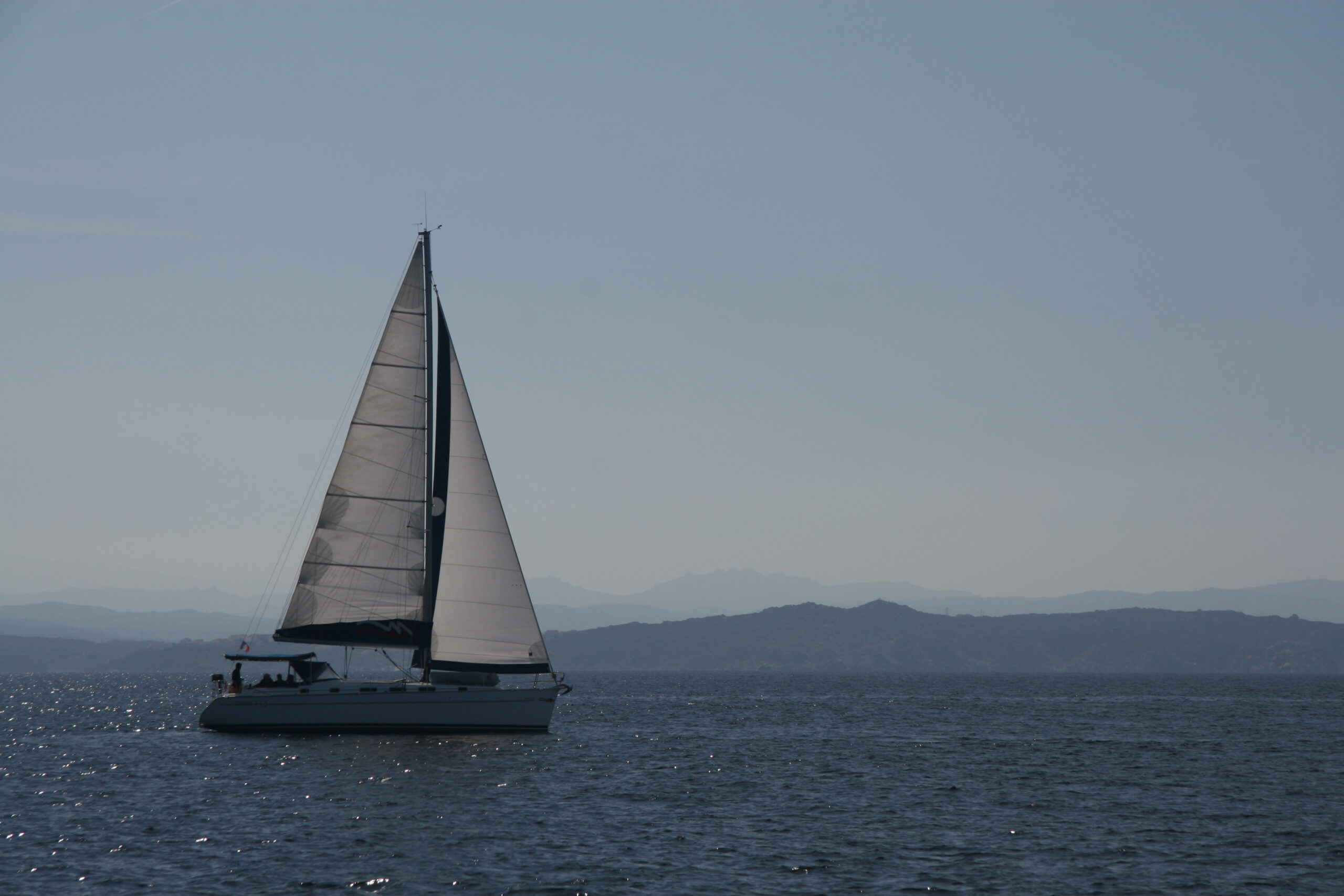
Cover photo: Stefan Ivanovich / Wikimedia Commons, CC BY-SA 3.0. Illustration photograph. The boat in the photograph is separate from the worked example.