From Kiboko III to Kiboko 4: Why Southern Wind Changed the Keel
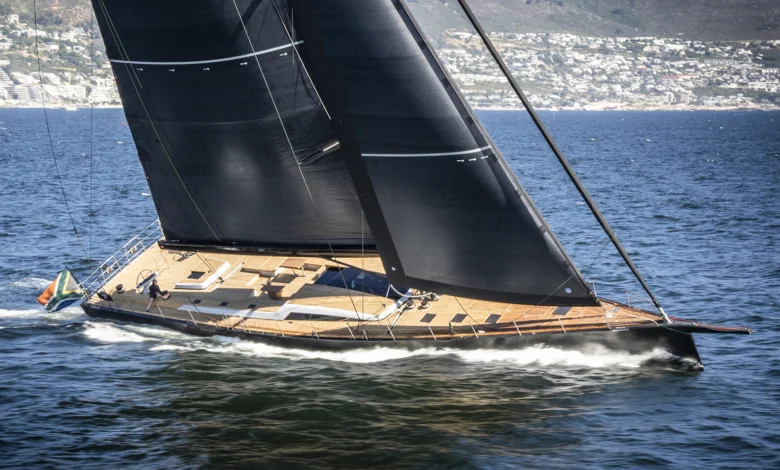
A fixed keel made sense on the SW105. A lifting keel now gives the same owner a different set of options aboard the SW108. The change says more about the brief than another award does.
The most revealing change between KIBOKO III and KIBOKO 4 is below the waterline. The older Southern Wind SW105 draws 4.5 metres with a fixed keel. Its successor, the SW108, has a lifting keel that draws 6.2 metres when lowered and just 4.0 metres when raised. For an owner returning to the same yard for a fourth yacht, that is a change worth examining.
KIBOKO 4 has now won the Best in Sail 24m – 40m category at the 2026 International Superyacht Society Awards, presented in Fort Lauderdale on 28 October. The result offers a useful occasion to look at what changed between two yachts designed for the same experienced sailor.
Why KIBOKO III had a fixed keel
When KIBOKO III was delivered in 2018, her fixed keel was a deliberate choice, not the only configuration available. Farr Yacht Design considered fixed, telescopic and lifting alternatives. According to the design team, the fixed 4.5-metre configuration suited the expected mix of cruising and occasional regattas, avoided an intrusive lifting mechanism in the saloon and left a clearer passage through the interior.

As Sail Universe reported at the time, the SW105 also had twin rudders, an open transom, generous aft sections and more sail area than the base configuration. The keel decision was part of a wider attempt to give the yacht enough stability and sail-carrying power without adding unnecessary complexity.
There was a practical benefit, too. A fixed keel avoids the moving structure and associated maintenance of a lifting system. But it also fixes the cruising draft at 4.5 metres, whether the yacht is racing offshore or entering a harbour.
What a lifting keel changes on KIBOKO 4
For KIBOKO 4, Farr Yacht Design describes a different set of priorities. The SW108 is intended for Mediterranean sailing, fast passages and occasional racing under the ORCsy rating system. With the lifting keel lowered, draft increases to 6.2 metres. Raising it reduces draft to 4.0 metres.
Those figures tell the story more clearly than a general claim about performance. Compared with KIBOKO III, the newer yacht can sail with 1.7 metres more draft when the keel is down, yet enter some harbours drawing half a metre less water when it is raised. The exact benefit at sea depends on the complete hull, appendage and sail plan; the draft figures alone do not prove that the new boat is faster.
Farr also specifies 607 square metres of sail area upwind and 1,288 square metres downwind. Twin rudders were already fitted to KIBOKO III and remain important for maintaining steering control as the yacht heels. A furling staysail and reefing options let the crew reduce power when the objective is a comfortable passage rather than a race result.

The yacht has changed above deck as well
The move from the SW105 to the SW108 is not simply a change of appendages. Nauta’s deck design for KIBOKO 4 addresses the practical needs of moving, working and relaxing aboard a large sailing yacht. Protected routes alongside the guest cockpit lead aft towards the helms, while the low-profile coachroof helps preserve sightlines and keeps the profile restrained.
An especially tangible change is aft. The SW108 has room for a five-metre tender in its transom garage, compared with the approximately 4.3-metre capacity of KIBOKO III’s garage. It is not a racing statistic, but a larger tender and a more usable stern platform can matter a great deal during a summer of cruising.
Below deck, KIBOKO 4 has four ensuite cabins, including an owner’s suite forward. Large hull windows and a skylight bring natural light into the saloon, where light oak is paired with darker walnut detailing. These are not racing specifications, but they reflect the other half of the brief: a yacht intended for time at anchor and extended cruising as well as regattas.
A familiar design team, a changing brief
Southern Wind, Farr and Nauta have been working together across multiple projects, including KIBOKO III and KIBOKO 4. That continuity helps make the differences informative: they reflect decisions made within a familiar design relationship, rather than a wholesale change of builder or naval architect.
The SW108 platform also shows how different owners can arrive at different solutions. Its first hull, GELLICEAUX, was developed with hybrid propulsion; KIBOKO 4 uses conventional diesel propulsion and puts particular emphasis on sailing weight, keel configuration and a deck adapted to its owner’s requirements. There is no single specification that defines performance cruising at this size.
The 2026 ISS award adds another distinction to KIBOKO 4’s record, following its recognition at the 2025 World Superyacht Awards. It does not settle whether a lifting keel is the right choice for every yacht. KIBOKO III showed why a fixed keel made sense for one brief. KIBOKO 4 shows how even a repeat owner can arrive at another answer.